
Thứ Năm, 28 tháng 11, 2019

Is Taiwan ready for GW-sized PV projects?

Developers of huge solar parks on the island must deal with resistance from the government, other industrial players and the farming sector. Local agricultural producer Taisugar has downsized its plans to build solar plants across 1,000 hectares of land it owns, while semiconductor manufacturer TMSC has denied it is building a massive solar park in Pingtung county, as reported by the Taiwanese media.

Taiwan’s state-run Taiwan Sugar Corp. (Taisugar) and semiconductor manufacturer Taiwan Semiconductor Manufacturing Co. (TMSC) plan to build large solar power projects, according to the Taipei Times.

TMSC reportedly intends to build what has been described as the island’s biggest solar park to date on 1,000 hectares of land in Pingtung county, according to an article published on Nov. 27. Taisugar, meanwhile, is also said to be planning an agrivoltaic project across more than 1,000 hectares of farmland it owns.

In a statement to pv magazine, however, TSMC denied the Taipei Times report. “TSMC currently has no plans to build any kind of power plant, PV or otherwise,” a spokesperson for the semiconductor manufacturer said. “TSMC is eager to see more renewable energy available for purchase in Taiwan. We have been cooperating with the Taiwan government and renewable energy suppliers to find solutions for accelerating green power generation in Taiwan.”

Taisugar, meanwhile, has also downsized its solar ambitions. In a press release issued on Nov. 6, the company said that recent media reports about its selection of sites for solar plants had affected its plans, and that it had withdrawn related tender announcements to work on what it said were more appropriate solutions.

“We will develop photovoltaic green energy in line with the government’s renewable energy policy,” the company stated, adding that it is now looking at sites in areas that are not environmentally sensitive. “Taiwan Sugar emphasizes that the company’s business is based on cooperating with the country’s development and being attentive to the social environment and the company’s sustainable operation, so that limited land resources are available in the right place and in the best possible way.”

The Taipei Times has also reported that officials from the Industrial Development Bureau, under Taiwan’s Ministry of Economic Affairs, have inspected land owned by Taiwan Sugar in Kaohsiung, as well as Yunlin, Changhua and Chiayi counties. The bureau is looking for locations on which to build new industrial zones, as scores of Taiwanese businesses continue to return from China in response to the ongoing US-China trade dispute. The newspaper claimed that many of these returning enterprises are eyeing properties owned by Taisugar, which is struggling to cope with the decline of the island’s sugar industry.

The daily said that many of the sites that Taisugar is considering for PV development are probably agricultural properties and forested plots of land. “Building solar energy facilities on them and changing the land classification might have an effect on the landscape and affect the nation’s overall farmland protection,” the newspaper said.

As in neighboring South Korea, land shortages are also a big issue for solar deployment in Taiwan, as roughly two-thirds of the country is mountainous.

The Taiwanese government aims to install 20 GW of solar by 2025, with 3 GW of rooftop PV and 17 GW of ground-mounted capacity. And Taiwanese Premier Su Tseng-chang recently said that the government expects around 3.7 GW of new solar capacity before 2021.

According to the International Renewable Energy Agency (IRENA), by the end of 2018 the country had installed around 2.6 GW of solar.


Lắp đặt điện mặt trời Khải Minh Tech
https://ift.tt/2X7bF6x
0906633505
info.khaiminhtech@gmail.com
80/39 Trần Quang Diệu, Phường 14, Quận 3
Lắp đặt điện mặt trời Khải Minh Tech
https://ift.tt/2ZH4TRU

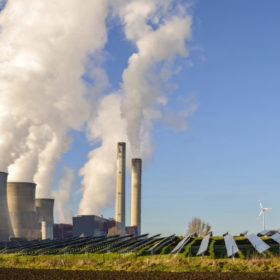
AXA ramps up pressure on corporate Europe with plans to phase out exposure to coal-related assets

The French insurance group has revealed plans to phase out its exposure to coal by 2030 in the European Union and the countries of the Organization for Economic Co-operation and Development, and by 2040 in other parts of the world.

AXA’s decision to eliminate its exposure to the global coal industry over the next two decades has ratcheted up the pressure on European companies to quickly announce definitive coal phase-out plans, in line with the goals of the UN Paris climate deal by 2021, according to Kaarina Kolle, finance and utility coordinator at Europe Beyond Coal. Kolle described AXA’s move as the “only defensible position” for European financial institutions when it comes to coal.

Lucie Pinson – an adviser for the finance campaign of Friends of the Earth France, a Paris-based NGO – agreed, noting that the AXA announcement significantly ramps up pressure on other insurance groups and financial institutions, including Talanx and BNP Paribas, to avoid “looking flat-footed” by quickly following suit by issuing more assertive coal policies of their own.

“AXA has set a new global benchmark for best practice with this coal phase-out policy,” claimed Pinson. “Zero tolerance for coal expansion is the only responsible action in a carbon-constrained world, and dumping coal companies like RWE, Adani, and KEPCO is essential for financial institutions that do not want to be complicit in the damage these companies cause to the climate and human health.”

Earlier this week, organizers of the fifth Climate Finance Day in Paris deliberately excluded about 400 companies that are still involved in the use of coal – underscoring the growing push in Europe to move away from fossil fuels. In late October, Carbon Tracker – a London-based, not-for-profit think tank – said that roughly 79% of coal-fired power plants in Europe operate at a loss. It estimated that total coal-related losses on the continent will hit €6.57 billion this year alone.

A recent study by EnAppSys showed that the European power market has already made significant progress in its shift away from coal-fired power generation. However, thus far this has largely benefited the gas sector, rather than renewables, the research firm said.


Lắp đặt điện mặt trời Khải Minh Tech
https://ift.tt/2X7bF6x
0906633505
info.khaiminhtech@gmail.com
80/39 Trần Quang Diệu, Phường 14, Quận 3
Lắp đặt điện mặt trời Khải Minh Tech
https://ift.tt/2ZH4TRU
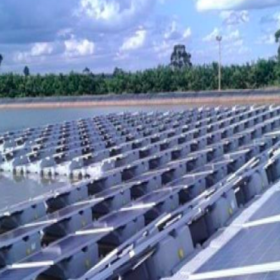
Asian Development Bank hails Bangladesh’s floating PV potential

A delegation from the Asian Development Bank recently paid a visit to the South Asian country to assess the prospects of floating PV in a nation that suffers from a general lack of land upon which to develop new renewable energy projects.

Bangladesh offers immense potential for floating solar, the Asian Development Bank (ADB) said this week, after an official ADB delegation visited several project sites in the country as part of a pre-feasibility study under its $2.34 million technical assistance program.

The ADB team visited the country’s first floating solar project – a 10 kW installation at Mongla, in southwestern Bangladesh’s Bagerhat district. Ezaz Al Qudat A Mazid, managing director of Solar EPC Development – the company behind the project – said that the ADB staff have expressed an interest in working with his business on further floating solar projects.

“We set [a] target to generate 200 MW from floating solar in five years,” Mazid told pv magazine. “The bank is interested to finance our projects.”

Private push

Salima Jahan, an official from Bangladesh’s Sustainable and Renewable Energy Development Authority, said the ADB has already promised to provide technical and financial assistance for the development of floating solar plants in the country. However, thus far all discussions have focused on government projects.

“We want them also to work with [the] private sector on floating solar,” Jahan said, adding that floating PV is a priority because land is extremely scarce in Bangladesh. “In this case, floating solar plants can be another option to raise renewable energy generation and the ADB has brought the issue to our notice.”

Jahan said the ADB team also visited a water treatment plant near Dhaka at Pagla, in the city of Narayanganj. The facility features 16 pools that could host floating solar arrays. In addition, the government of Bangladesh recently announced plans for a 50 MW floating PV project at Kaptai Lake in Chittagong district – also with ADB support.

The site in Mongla project that the ADB team visited will eventually be scaled up to 15 MW. Dynamic Green Energy is also now talking to a range of government departments about developing a 10 km² floating PV plant on the Padma River in Manikganj district.


Lắp đặt điện mặt trời Khải Minh Tech
https://ift.tt/2X7bF6x
0906633505
info.khaiminhtech@gmail.com
80/39 Trần Quang Diệu, Phường 14, Quận 3
Lắp đặt điện mặt trời Khải Minh Tech
https://ift.tt/2ZH4TRU

Indian government now finalizing new energy policy, says think tank

Aside from an emphasis on energy efficiency, the Indian government’s new energy policy will primarily focus on Indian-made battery cells for electric vehicles, in addition to demand creation initiatives and new incentives.

R.P. Gupta, additional secretary of NITI Aayog – an Indian government think tank – has announced that New Delhi is now in the process of finalizing a new national energy policy.

“The new policy will address the issues of accessibility and affordability, energy security … and the overall requirement of energy,” Gupta said at a recent energy storage conference. “The focus will also be on [Indian-made] cells used in batteries in electric vehicles, along with policies for demand creation and measures to incentivize investments.”

India currently imports almost all of its lithium-ion batteries. Most of the country’s work on li-ion batteries is still focused on R&D, and primarily at the central government level. In the private sector, meanwhile, companies are primarily building battery packs with lithium-ion cells imported from China.

“Hopefully in a short period of time, a new policy will come into place to encourage domestic manufacturers,” Gupta added, noting that the government is also focusing on energy efficiency. “What we have estimated is that if we come out with proper policies and solutions for energy efficiency, the total energy requirement can be reduced by 20%.”

Manish Sharma, CEO of Panasonic India, emphasized the need for a battery manufacturing ecosystem.

“With India’s focus on renewable energy and electric mobility, energy storage solutions are set to play a crucial role in scripting the sector’s success,” Sharma said. “Given the increasing demand and competitiveness of renewable power generation options, electricity storage will play a crucial role in enabling the next phase of the energy transition. Hence it is important to build an ecosystem which promotes battery manufacturing in the country.”


Lắp đặt điện mặt trời Khải Minh Tech
https://ift.tt/2X7bF6x
0906633505
info.khaiminhtech@gmail.com
80/39 Trần Quang Diệu, Phường 14, Quận 3
Lắp đặt điện mặt trời Khải Minh Tech
https://ift.tt/2ZH4TRU

Macquarie to power global operations with 100% renewables by 2025

The Australian investment bank has become the latest company to sign The Climate Group’s RE100 initiative, bringing it into a growing pool of businesses that are focused on the global energy transition.

Macquarie Group has signed up to the global initiative RE100, underscoring its plans to power its global operations with 100% renewable electricity by 2025. The investment bank has been carbon-neutral in sourcing its energy supply since 2010 by purchasing carbon credits, but it will now also seek to develop its own projects and enter into power purchase agreements to supply clean electricity for its buildings.

The Sydney-based group employs more than 15,700 people in 31 markets. At the United Nations Climate Action Summit in New York in September, it vowed to develop a 20 GW pipeline of renewable energy projects over the next five years through its Green Investment Group (GIG), and announced plans to join RE100. On Wednesday, the bank officially became a signatory to the initiative, as announced by the Australian coordinator of the RE100 initiative, Jon Dee.

Macquarie has a long track record of investing in renewable energy projects. Its own investments since 2010 and its acquisition of GIG in 2017 have contributed to more than 22 GW of renewable generation capacity, utilizing more than AUD 8 billion ($5.4 billion) of direct and arranged finance. In one of its major commitments, Macquarie agreed to provide development capital and take an equity stake in an AUD 22 billion solar+wind hybrid project in northwestern Australia, the 11 GW Asian Renewable Energy Hub, reflecting the growing confidence in the project’s potential.

The group is now joining a growing pool of Australian businesses in the RE100 global initiative, which has thus far been dominated by the banking sector. Commonwealth Bank of Australia was the first Australian business to join RE100 last November. On the back of a 12-year PPA, it has been sourcing energy from the largest wind project in New South Wales – the 270 MW Sapphire Wind Farm – since January of this year. It is also moving toward 100% renewable power by 2030. It was later followed by Westpack, Bank of Australia and ANZ.

The RE100 member list also includes QBE Insurance Group and Atlassian, which became the first Australian tech company to vow to globally go all green by 2025. Convened by The Climate Group, the RE100 global corporate leadership initiative brings together 212 companies committed to sourcing 100% renewable electricity.


Lắp đặt điện mặt trời Khải Minh Tech
https://ift.tt/2X7bF6x
0906633505
info.khaiminhtech@gmail.com
80/39 Trần Quang Diệu, Phường 14, Quận 3
Lắp đặt điện mặt trời Khải Minh Tech
https://ift.tt/2ZH4TRU
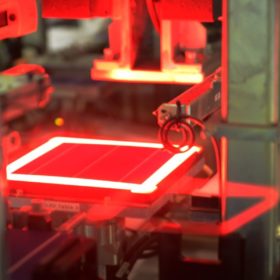
Vikram Solar targets US market with new PV module offerings

Vikram Solar recently announced three commercial-sized solar modules for the U.S. market – framed and frameless bifacial offerings, plus a half cut standard mono PERC panel – whose peak output ranges from 375 W through 425 W, available from January.

Vikram Solar’s projects run the full gamut of size, from  1 MW of floating PV to a 200 MW utility-scale whale. The Indian engineering, procurement and construction (EPC) company’s rooftop PV portfolio consists of more than 500 installations at 250+ sites, totaling 27 MW installed, and more than 25 MW  in the pipeline. The utility scale portfolio is just greater than 1 GW, in stages from commissioned to under development.

Vikram Solar is also a solar panel manufacturer. Currently, it has about 1.1 GW of annual manufacturing capacity in India, with plans to hit 2 GW by the middle of 2020. The company opened an office in Framingham, Massachusetts, in February 2018, and has been in Germany for a decade. It runs its international module business, which includes the U.S. market, via offices in Singapore.

The group has more than 40 years of business behind it, from its start in the tea processing industry to its eventual entry into the textile manufacturing field. It jumped into the solar business in 2006.

pv magazine USA recently sat down with the company at Solar Power International 2019 in Salt Lake City, Utah, as it announced three solar modules for the U.S. market. The company’s product specification pages are located here, with the three U.S. products noted below:

  • SOMERA P-Duplex Frameless Bifacial – 72 cells, module ranging from 375 to 400 Wp, 30-year linear power warranty, available in January 2020
  • SOMERA P-Duplex Framed Bifacial Half Cell – 144 half cells, transparent back sheet, modules ranging from 390 W to 420 Wp, 30-year linear power warranty, available in March 2020
  • SOMERA Grand Ultima Max Half Cell – 150 mono PERC half-cells, modules ranging from 405 W to 425 Wp, 27-year linear power warranty, available in January 2020

When asked about the longer-than-average warranty, Ravi Vaidya, VP of global markets at Vikram Solar, noted that all of the modules are individually tracked, so problems can be traced, helping the company to quickly fix issues at the source. Vikram Solar’s EPC unit builds with the group’s own modules, which also gives it additional insight into field issues.

Like many groups, Vikram Solar works with DNV GL to test their bill of materials. Recently, lessons of automation have driven gains. The company uses at least some of Meyer Burger’s manufacturing lines for product headed to the U.S. market, and thinly laid-out busbars have been a part of that relationship.


Lắp đặt điện mặt trời Khải Minh Tech
https://ift.tt/2X7bF6x
0906633505
info.khaiminhtech@gmail.com
80/39 Trần Quang Diệu, Phường 14, Quận 3
Lắp đặt điện mặt trời Khải Minh Tech
https://ift.tt/2ZH4TRU

Renewable Energy Surge Could Power A New Industrial Australia

In spite of the best efforts of our government, Australia is going to overshoot 100% renewables. That’s the conclusion of big names in renewables like Oliver Yates (inaugural CEO of the Clean Energy Finance Corporation and former independent candidate for the federal seat of Kooyong), who yesterday told a Smart Energy Council online seminar we […]

The post Renewable Energy Surge Could Power A New Industrial Australia appeared first on Solar Quotes Blog.


Lắp đặt điện mặt trời Khải Minh Tech
https://ift.tt/2X7bF6x
0906633505
info.khaiminhtech@gmail.com
80/39 Trần Quang Diệu, Phường 14, Quận 3
Lắp đặt điện mặt trời Khải Minh Tech
https://ift.tt/2ZH4TRU